COMMERCIAL SECURITY • ACTIVE INTRUSION PROTECTION
Security Fog Systems for Commercial Businesses: How Active Fog Protection Can Help Stop Smash-and-Grab Theft
Traditional security systems are designed to detect an intrusion, sound an alarm, send notifications and help initiate a response. But what happens when a few seconds can determine whether an intruder reaches an ATM, gaming machine, jewelry display or other high-value asset?
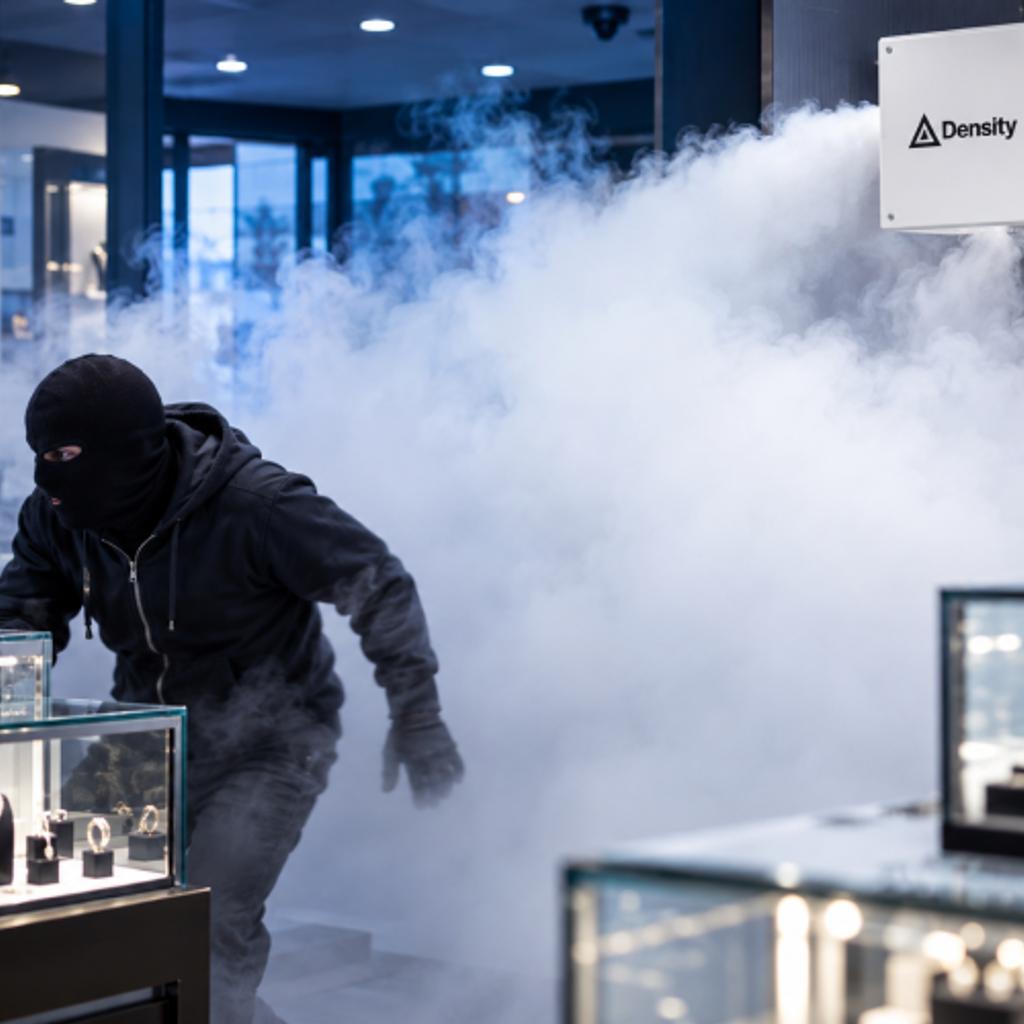
Security fog adds another layer to the security strategy: rapid visibility reduction. When properly integrated with an intrusion detection system, a commercial security fogger can rapidly fill a protected area with dense fog, making it difficult for an intruder to see, navigate or locate valuable assets.
Why Commercial Businesses Are Looking Beyond Traditional Alarms
A conventional commercial security system is built around detection and notification. Door contacts, motion sensors, glass-break detectors and other intrusion devices identify unauthorized activity. The alarm is then triggered and the appropriate people or monitoring personnel can be notified.
That approach remains an important part of a modern commercial security strategy. However, detection does not necessarily mean that an intruder has stopped.
In a smash-and-grab event, the time between intrusion and theft can be extremely short. A criminal may enter a retail location, break a display, grab merchandise or attempt to access an ATM or gaming machine and leave before conventional security responses have time to physically disrupt the activity.
This is where an active intrusion protection technology such as a security fog system can provide an additional layer.
SEE SECURITY FOG IN ACTION
How Rapid Security Fog Changes an Intrusion Event
The following video demonstrates the concept of rapid security fog deployment and how dense fog can dramatically reduce visibility during an intrusion event.
What Is a Security Fog System?
A security fog system is an active intrusion protection solution designed to rapidly release a dense white fog when an authorized security trigger occurs.
Unlike conventional smoke, the security fog described by Density USA is a water-based dense fog designed specifically for security applications. The supplied Density USA fire and police information describes the fog as breathable, non-combustible and designed to reduce visibility rather than create a combustion-based smoke condition.
The objective is straightforward: reduce an intruder's ability to see what is around them.
When visibility is rapidly reduced, an intruder may have difficulty identifying valuable merchandise, locating cash, operating equipment, navigating through the premises or continuing a theft attempt.
Security Fog Is a Visibility-Reduction Technology
It is useful to think of security fog as a visibility-control technology rather than a replacement for an alarm system. The fogger does not replace intrusion detection, surveillance, access control or professional monitoring.
Instead, it can work alongside those technologies to create multiple layers of protection.
LAYERED COMMERCIAL SECURITY
Security Fog Works as an Additional Layer — Not a Replacement
The strongest commercial security strategies rarely depend on one technology. Instead, different technologies perform different jobs.
HOW IT WORKS
How Does a Commercial Security Fogger Work?
A properly designed security fog installation typically works together with the property's existing security infrastructure. The exact triggering method depends on the fogger, intrusion alarm system and installation configuration.
Intrusion Detected
An intrusion sensor or configured security device identifies unauthorized activity.
Alarm Condition Confirmed
The security system evaluates the programmed trigger conditions before activation.
Fogger Activates
The security fog system rapidly releases dense fog into the protected area.
Visibility Drops
The dense fog creates a temporary visual barrier, making it difficult for the intruder to see or navigate.
Intrusion Response Continues
Monitoring, surveillance and the property's established response procedures continue while the fog disrupts the intruder's ability to operate.
DENSITY USA SECURITY FOG
Understanding Security Fog Deployment
Density USA has developed security fog technology for commercial intrusion protection applications. The company's supplied fire and police information describes deployments in retail environments and other commercial locations.
THE SMASH-AND-GRAB PROBLEM
Why Security Fog Is Especially Relevant to Smash-and-Grab Theft
Smash-and-grab theft is fundamentally a time problem.
The objective of the offender is usually not to remain inside the business for an extended period. The goal is to enter, identify valuable targets, break or access them, take the highest-value items possible and leave quickly.
Traditional security technologies can detect and document the event, but an active visibility-reduction system introduces a different response mechanism.
Traditional Detection
- Detects unauthorized activity
- Triggers an alarm
- Sends alerts
- Supports monitoring and response
- Provides evidence through surveillance
Detection + Security Fog
- Detects unauthorized activity
- Triggers the configured alarm sequence
- Rapidly reduces visibility
- Disrupts the intruder's ability to navigate
- Adds another active layer to the response
The objective is not to replace the alarm or monitoring system. It is to introduce another obstacle between the intruder and the valuable assets they are attempting to reach.
HIGH-RISK COMMERCIAL ENVIRONMENTS
Which Businesses Can Benefit From Security Fog?
Security fog can be considered for commercial environments where rapid intrusion disruption and visibility reduction are important security objectives.
Gaming & Gambling Environments
Gaming zones, amusement gaming environments, gambling machines, video gambling, slot machines, poker slots and gambling game rooms may contain valuable equipment, cash-handling systems and high-value electronics.
ATM Machines
ATMs can be attractive targets during smash-and-grab attacks. Security fog can provide an additional active layer around the protected area when integrated with the site's security system.
Jewelry Stores
Jewelry retailers often operate with concentrated high-value inventory in display cases. Rapid visibility reduction can make it more difficult for intruders to identify and access valuable merchandise.
Liquor Stores
Liquor stores can contain valuable inventory and cash-handling areas, making layered intrusion protection particularly relevant.
Gas Stations
Gas stations combine retail inventory, cash-handling operations and frequently extended operating hours. Security fog can be evaluated as part of a broader commercial intrusion strategy.
Restaurants
Restaurants can benefit from layered security designed around their cash-handling areas, entry points and valuable equipment.
Convenience Stores
Convenience stores may have cash, merchandise and extended operating hours, making rapid intrusion disruption an important consideration.
Retail Stores
Retail environments with high-value merchandise or vulnerable display areas can evaluate security fog as an additional layer of protection.
Grocery Stores
Larger retail environments can use layered intrusion protection to complement surveillance, alarms and monitoring.
Warehouses & Commercial Facilities
Warehouses and commercial facilities with valuable inventory, equipment or restricted areas can consider security fog as part of a broader intrusion protection design.
REAL-WORLD SECURITY FOG
See How Security Fog Can Disrupt an Intrusion
BUSINESS BENEFITS
Key Benefits of a Commercial Security Fog System
Rapid Intrusion Disruption
Dense fog is designed to rapidly reduce visibility, potentially disrupting an intruder's ability to continue navigating or locating assets.
Protect High-Value Assets
Security fog can be considered for environments containing ATMs, gaming equipment, jewelry, liquor inventory, electronics and other valuable property.
Works With Layered Security
Fogging systems can be designed to operate alongside intrusion alarms, surveillance cameras, monitoring and other security technologies.
Helps Limit the Intruder's Visual Advantage
The core purpose of the fog is to make the protected area difficult to see and navigate during an intrusion.
Supports Business Continuity
Rapidly disrupting an intrusion may help limit the potential duration and impact of theft, vandalism and operational disruption.
Creates a Visible Active Response
Unlike a notification that exists primarily as an alert, security fog physically changes the environment inside the protected area.
Is Security Fog the Same as Smoke?
No. Security fog and smoke are fundamentally different technologies.
The Density USA information supplied for this project describes its security fog as a water-based dense fog rather than combustion-generated smoke. It is described as non-combustible, breathable and intended to reduce visibility during a security event.
| Security Fog | Conventional Smoke |
|---|---|
| Designed for security applications | Associated with combustion or fire |
| Water-based formulation described by Density USA | Not a security-specific visibility technology |
| Designed to reduce visibility | Produced by combustion or burning materials |
| Non-combustible according to supplied Density USA information | Can be associated with fire and combustion hazards |
IMPORTANT SAFETY CONSIDERATIONS
What Happens If There Is a Fire or Emergency Response?
This is one of the most important questions businesses should ask before installing a security fog system.
According to the supplied Density USA Fire and Police information, the fogger is intended to activate based on the configured intrusion alarm conditions rather than simply responding to heat.
The supplied material specifically states that the fogger does not activate simply because a fire occurs and that it is not designed to trigger from heat alone.
The same information explains that the fog is water-based and described as dissipating in the presence of flame or high heat.
Security fog installations must always be evaluated against applicable fire codes, local ordinances, alarm requirements, emergency procedures, building configuration and manufacturer specifications.
The supplied Density USA material specifically notes that local fire ordinances may need to be reviewed when implementing the technology.
TECHNOLOGY EXPLAINED
Learn More About Density Security Fog Technology
What Should Be Considered Before Installing a Security Fogger?
A commercial security fog system should not be treated as a simple plug-and-play security device. Proper system design is important because the location, room configuration, alarm architecture and intended security objective all affect how the solution should be deployed.
1. Identify the Assets That Need Protection
Start by identifying the assets most likely to attract an intruder. These may include cash-handling areas, ATMs, gaming machines, jewelry displays, liquor inventory, electronics, restricted areas or other high-value merchandise.
2. Evaluate the Protected Area
The physical dimensions and configuration of the area should be evaluated when selecting and positioning a fogger.
3. Review the Existing Alarm System
The fogger should be evaluated alongside the property's existing intrusion detection architecture. The objective is to create a controlled trigger sequence rather than introduce an isolated security device.
4. Consider Occupancy
The business should determine whether the system is intended primarily for after-hours protection, controlled panic activation or another approved security application.
5. Review Fire and Local Requirements
Fire department coordination, local ordinances, emergency procedures and applicable regulations should be considered before installation.
6. Plan Warning and Notification Procedures
Personnel, monitoring providers and appropriate emergency responders should understand that the property contains a security fog system.
DENSITY USA
Security Fog Technology With International Deployment Experience
The supplied Density USA information states that its fogging technology has been used in Europe for more than 15 years and references deployments involving the UK postal system, retail stores, jewelry stores, convenience stores and grocery stores.
The same source references installations across countries including Italy, Spain, France, Sweden, Denmark, Mexico and Australia, and states that Brazil has been installing foggers in post offices.
These examples illustrate how security fog technology has been positioned internationally as an additional intrusion protection layer for commercial environments.
Deployment numbers and international installation claims in this section are based on information supplied by Density USA and should be independently verified for current figures before use in formal marketing or procurement documentation.
SECURITY FOG VIDEO LIBRARY
Watch Additional Security Fog Demonstrations
These additional Density USA videos can help security professionals understand different aspects of security fog deployment, operation and real-world use.
Where Does Security Fog Fit in a Modern Commercial Security Strategy?
| Technology | Primary Purpose | Role During an Intrusion |
|---|---|---|
| Video Surveillance | Visibility and evidence | Shows what is happening and supports investigation |
| Intrusion Alarm | Detection and notification | Identifies unauthorized activity and triggers alerts |
| Access Control | Controlled entry | Limits access to authorized people |
| Professional Monitoring | Event response | Receives and evaluates alarm events |
| Security Fog | Active visibility reduction | Disrupts the intruder's ability to see and navigate |
The strongest approach is usually not choosing one technology over another. It is designing the technologies to work together.
Can a Security Fog System Affect Insurance Considerations?
Businesses should discuss security upgrades with their insurance provider when evaluating a security fog system.
A professionally designed and installed active security layer may be relevant to a broader risk-mitigation discussion, particularly when the business is attempting to demonstrate improvements to its commercial security strategy.
Before assuming that a security fog system qualifies for a discount, ask the insurer what systems and certifications are recognized under the policy.
Security Fog System FAQs
Learn how security fog systems work, how they integrate with commercial security systems, and where they can be used to help protect businesses and high-value assets.
A security fog system is an active intrusion protection solution that rapidly releases a dense, white fog when an intrusion is detected and the system's configured trigger conditions are met.
The fog significantly reduces visibility within the protected area, making it more difficult for an intruder to see, navigate or locate valuable assets.
A security fog system is connected to an intrusion detection and alarm system. When the configured intrusion conditions are met, the alarm system can trigger the fog generator.
The unit rapidly releases dense fog into the protected area, substantially reducing visibility and disrupting an intruder's ability to identify and remove valuable assets.
Yes. Security fog systems can be designed to integrate with existing intrusion alarm systems and other security hardware.
The exact integration method depends on the alarm panel, sensors, control logic and fog generator being installed. A professional security integrator can evaluate the existing system and determine the appropriate configuration.
No. Security fog is designed specifically for security applications and is different from combustion-generated smoke.
The supplied Density USA information describes its security fog as water-based, breathable and non-combustible.
The supplied Density USA information describes the security fog as non-toxic and breathable. The exact composition and safety characteristics depend on the specific fog system and fluid used.
Businesses should review the manufacturer's safety documentation and applicable requirements before installation.
The supplied Density USA information states that its security fog does not leave a damaging residual effect. However, businesses should evaluate the specific system and application before deployment.
Yes. Jewelry stores can be an application for security fog because they often contain high-value, easily transportable inventory and can be vulnerable to rapid smash-and-grab incidents.
When integrated with an appropriate intrusion detection system, security fog can provide an additional layer of protection by rapidly reducing visibility during a confirmed intrusion.
Security fog can be considered for locations containing ATMs, gaming machines and other high-value equipment where rapid physical access creates a theft risk.
Suitability depends on the facility layout, equipment, intrusion detection system and installation requirements.
According to the supplied Density USA information, the fog generator is triggered by the intrusion alarm rather than by heat from a fire.
Fire and life-safety requirements vary by location. The proposed installation should therefore be reviewed against applicable fire codes, alarm requirements and local authority requirements.
Security fog systems are designed for rapid deployment once the configured intrusion conditions are met.
The actual activation and fogging performance depends on the specific model, alarm configuration, installation and protected environment. Exact activation performance should therefore be confirmed for the system being installed.
Security fog can be considered for businesses and facilities where rapid theft of valuable assets is a significant concern.
- Jewelry stores
- Retail stores
- Convenience stores
- Grocery stores
- ATM and financial locations
- Gaming and entertainment facilities
- High-value equipment locations
- Warehouses and storage facilities
- Commercial facilities with valuable inventory
COMMERCIAL SECURITY CHECKLIST
Security Fog System Deployment Checklist
Before deploying a security fogger, commercial property owners, facility managers and security professionals should consider:
- Identify the highest-value assets requiring protection.
- Review current intrusion detection and alarm infrastructure.
- Determine appropriate fogger locations.
- Evaluate room size and configuration.
- Review occupancy and operating hours.
- Establish the desired trigger sequence.
- Coordinate with the alarm monitoring provider.
- Review local fire department and fire-code requirements.
- Establish emergency notification procedures.
- Use the manufacturer's installation and safety documentation.
- Train appropriate personnel.
- Regularly inspect and maintain the complete security system.
PROTECT HIGH-RISK COMMERCIAL ENVIRONMENTS
Stop Smash-and-Grab Theft Before It Becomes a Major Loss
If your business handles cash, gaming equipment, ATMs, jewelry, liquor inventory or other high-value assets, security fog may provide an additional active layer of intrusion protection.
VBTRONICS can evaluate your existing security infrastructure and help determine whether a commercial security fog solution should be integrated with your intrusion alarm and other security technologies.
Recent Posts
-
 Security Fog Systems: A Powerful Defense Against Smash-and-Grab Theft
 -
 Building a Safer, More Connected Tomorrow: VBTRONICS Security & Communication Solutions
 -
 Construction Site Security with Remote Guarding & Solar Surveillance
 -
 Construction site Off Grid Solution
 -
 Operation CameraSwarm: Over 14,000 Compromised Cameras Highlight the Need for Hardened Commercial Security Infrastructure